Ladies and gentlemen,
I am Dr. Waldemar Niklinski, commander of the American Branch of the Rooster Brotherhood.
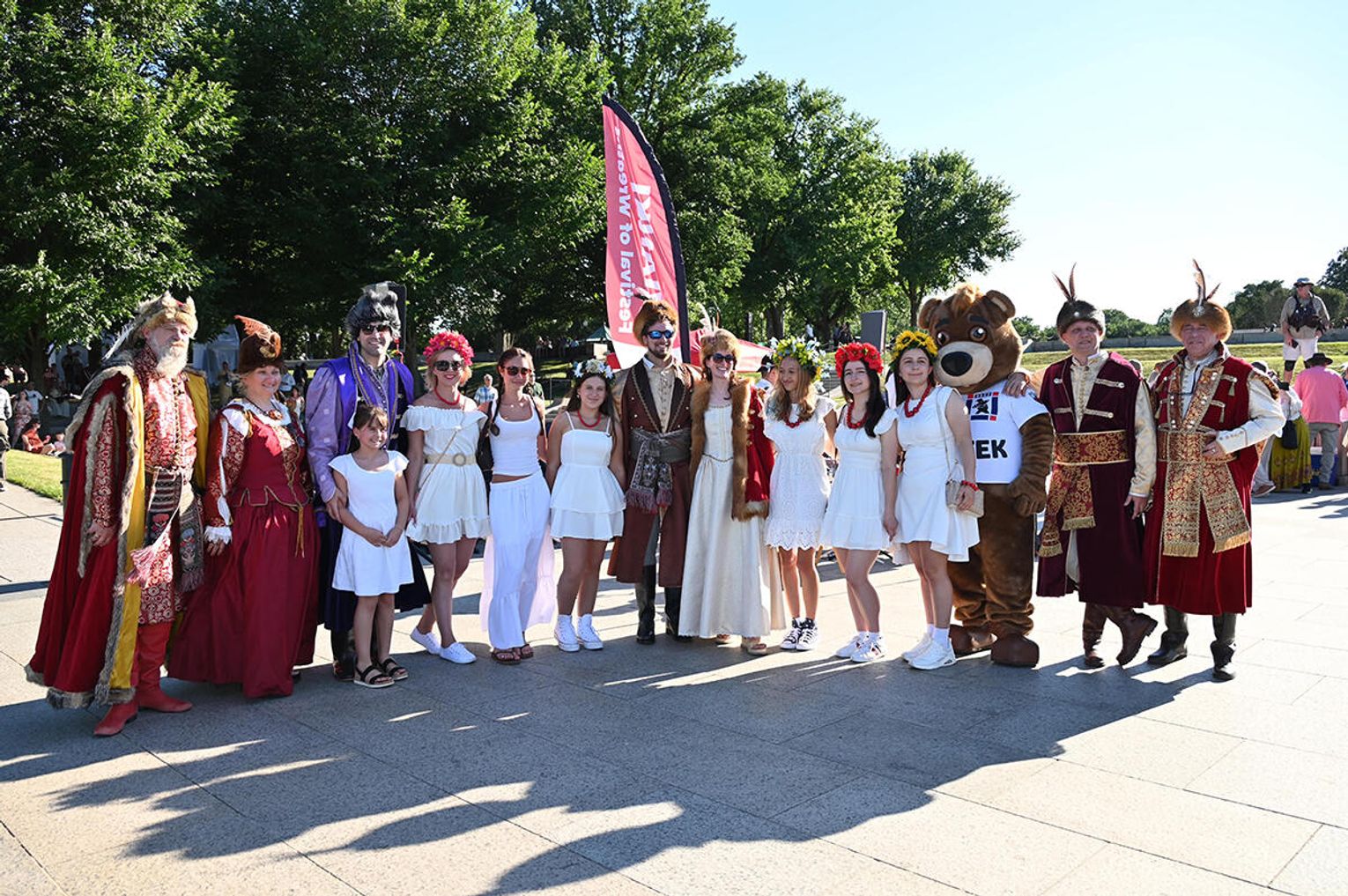
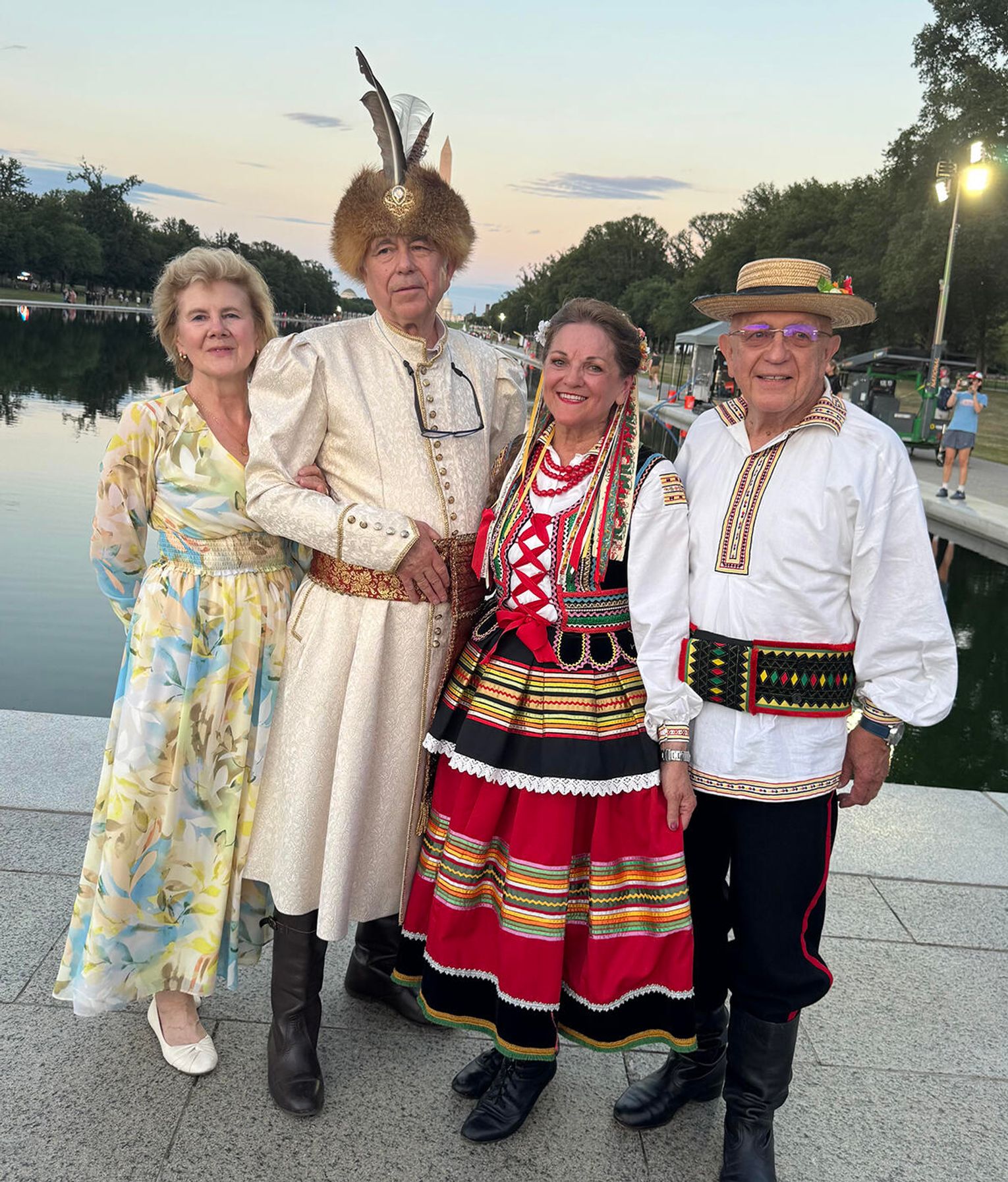
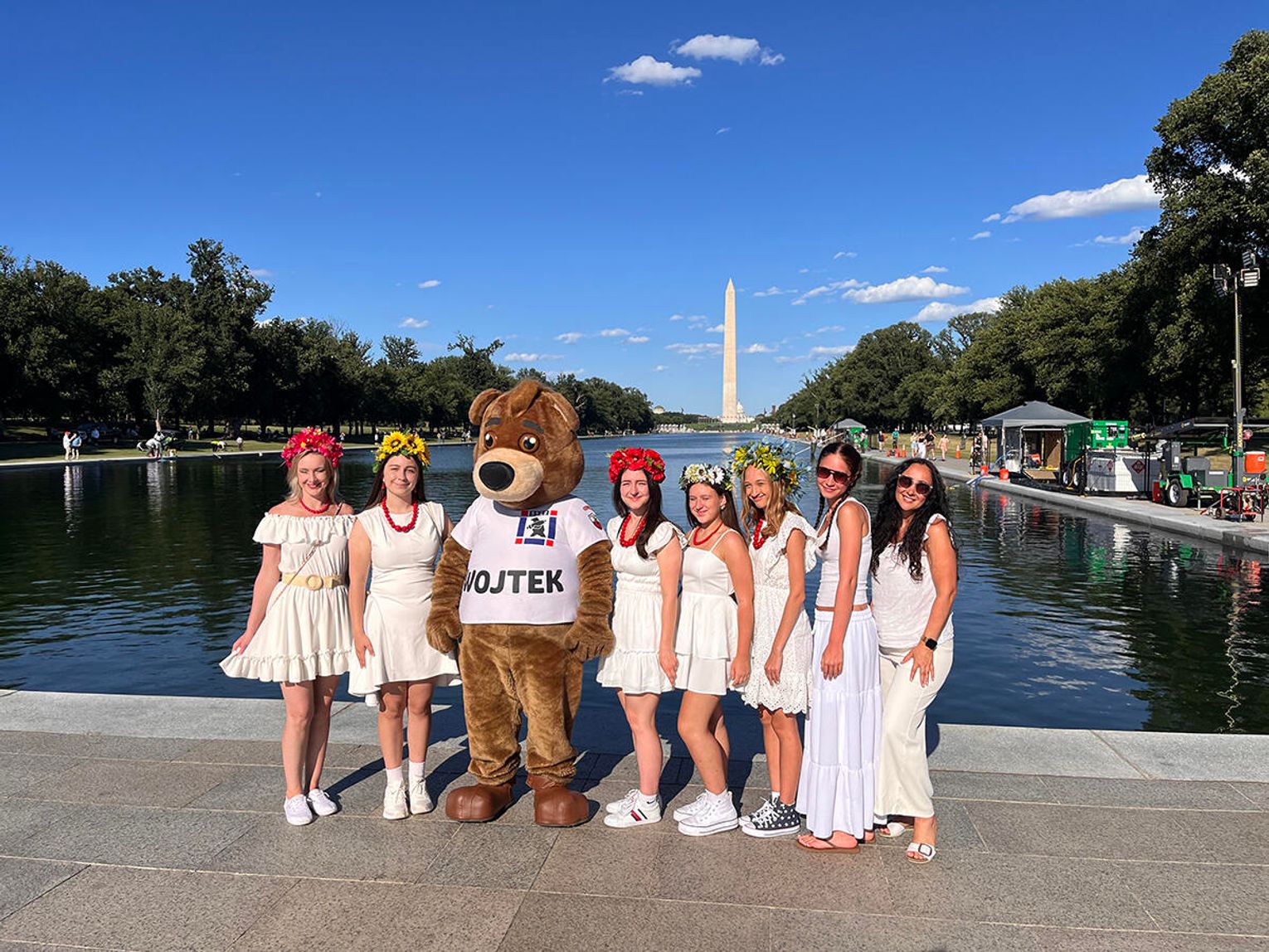
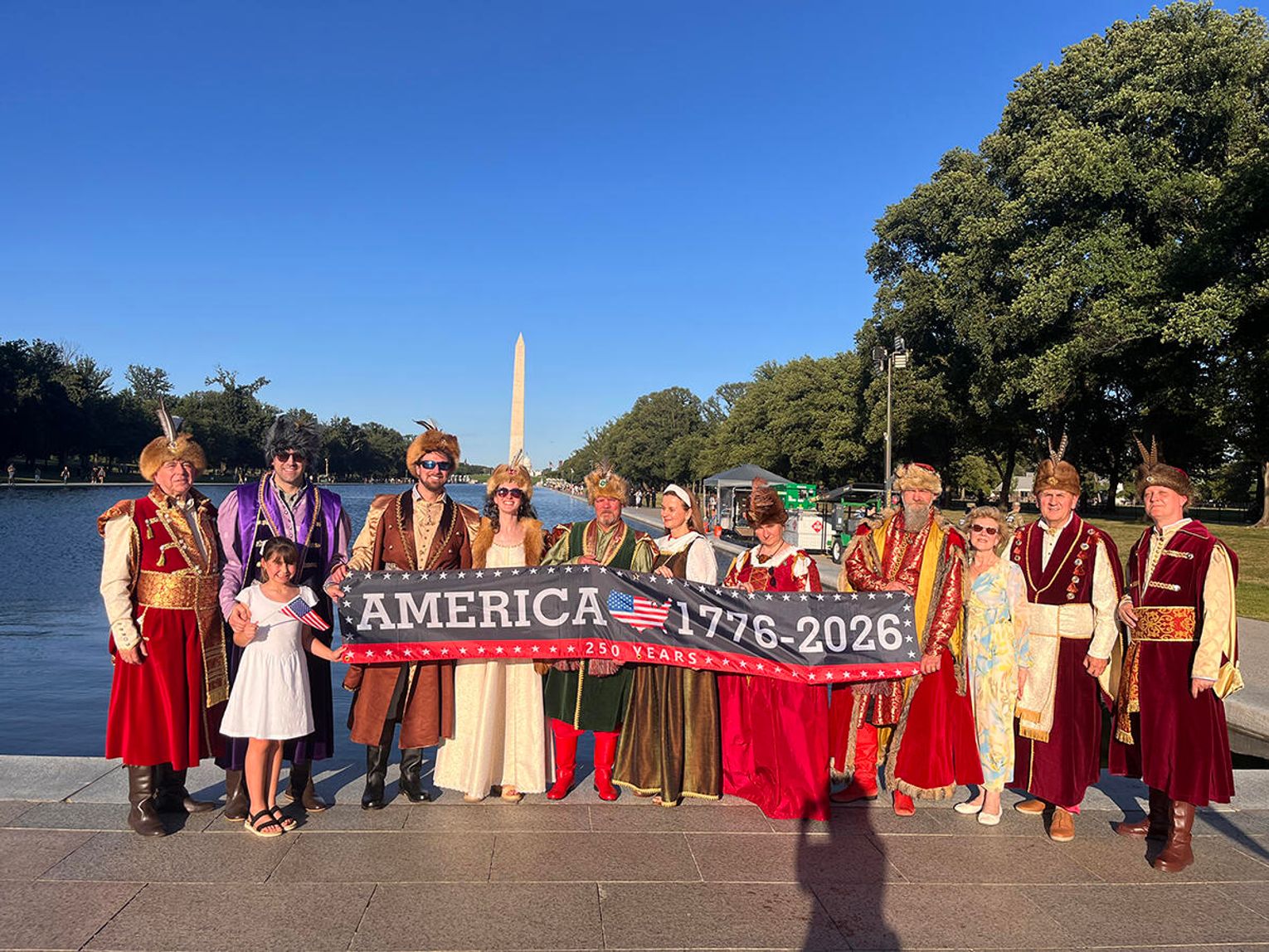
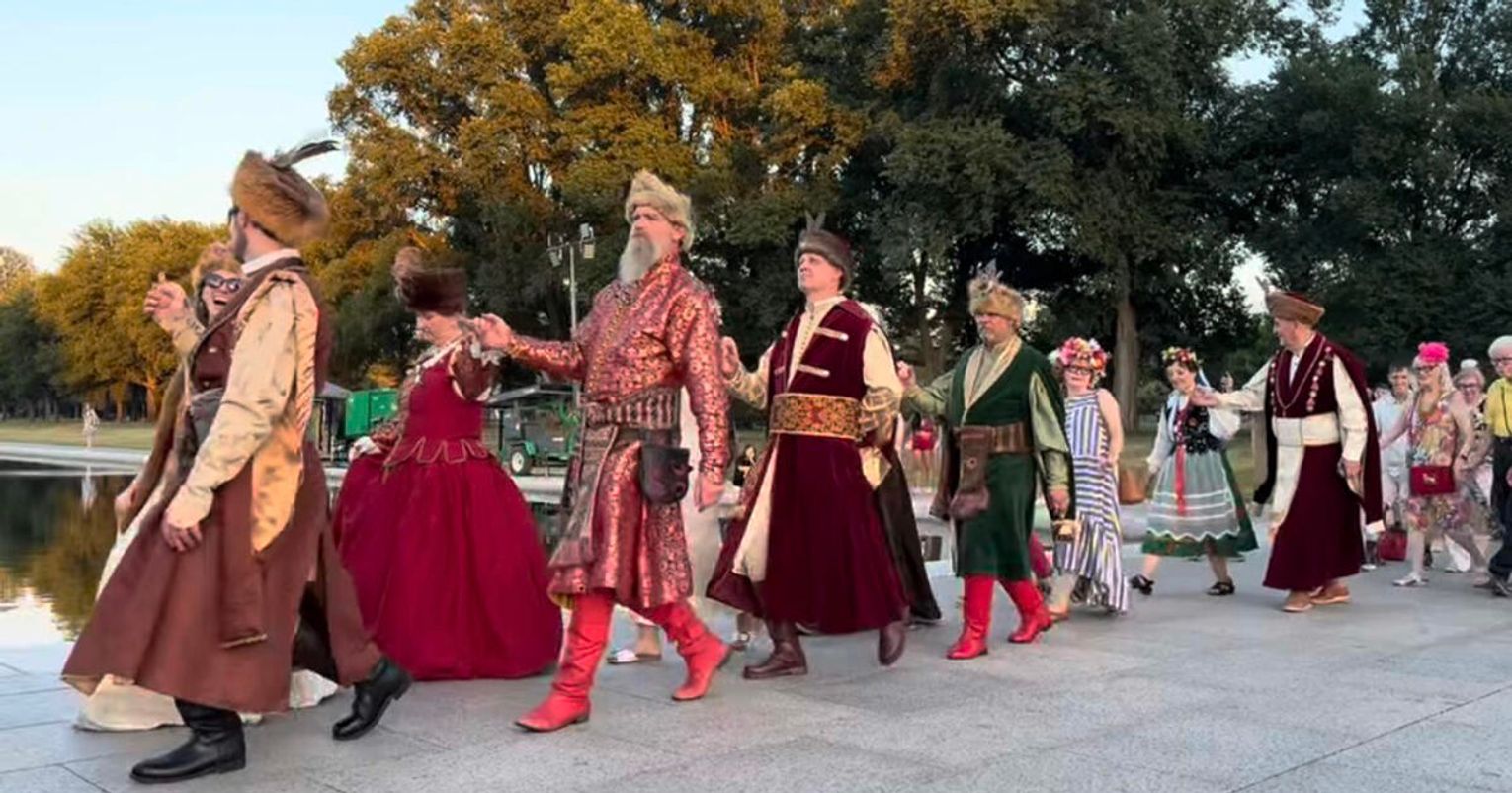
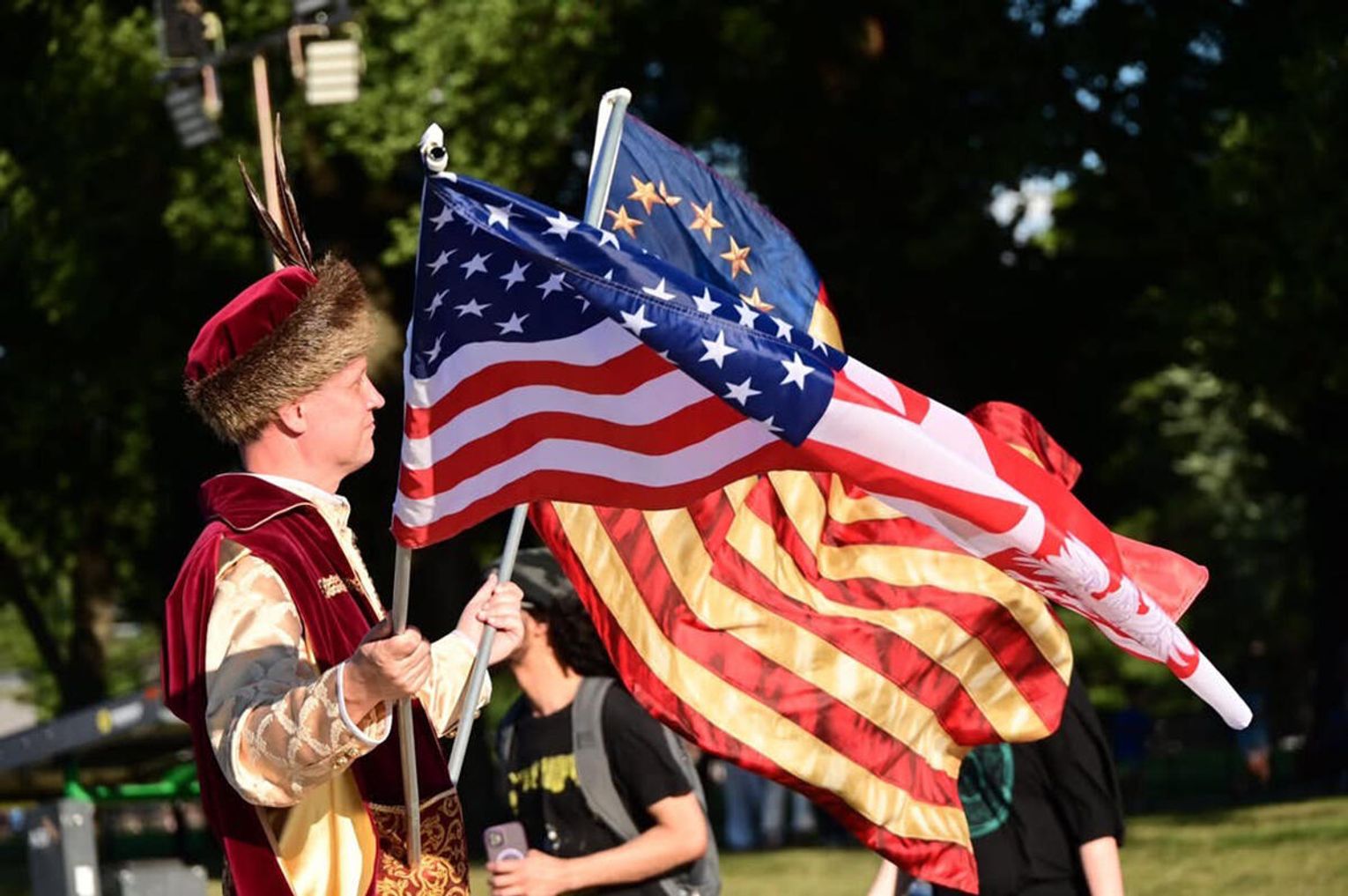
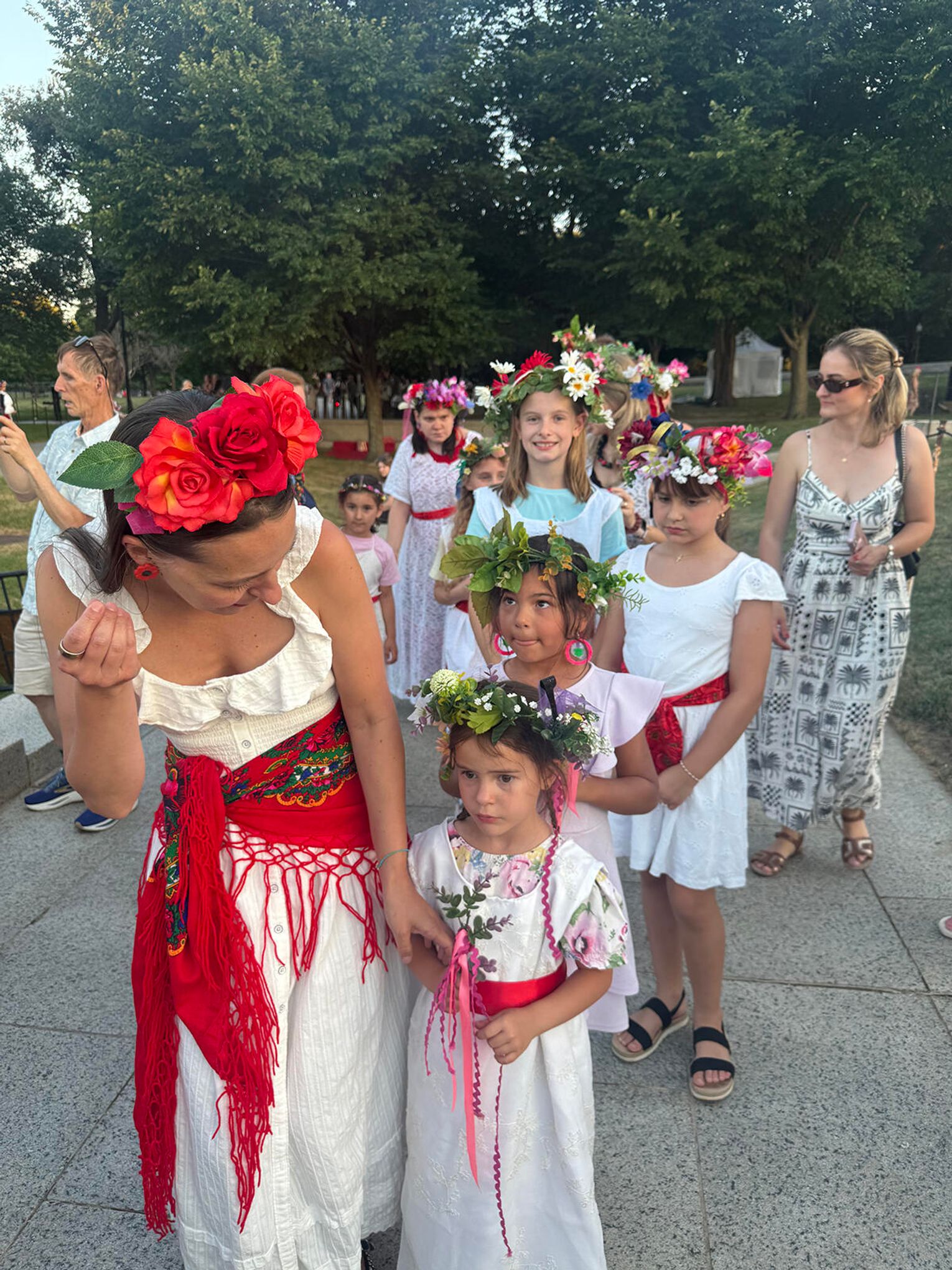
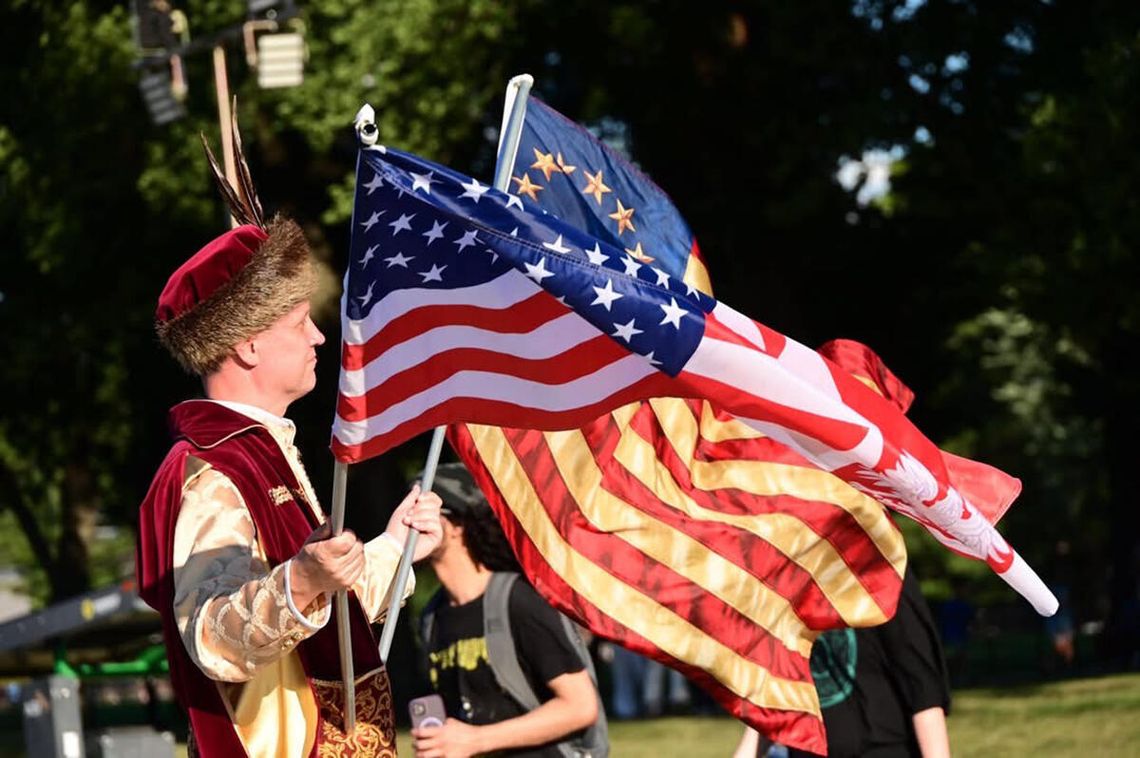
The Rooster Brotherhood is an ancient Polish organization, which in the past defended city walls against external forces. Today, the Rooster Brotherhood upholds Polish culture, customs and tradition. We came today to Washington DC to participate in an old Polish custom – the festival of wreaths – and to celebrate the 250th anniversary of the United States of America.
Let us start with the traditional Brotherhood calling.
When I say Vivat Polonia, you respond Vivat!
On my second call – Vivat land of freedom, you answer Vivat, Vivat!
On my third calling – Vivat the United States of America, you answer Vivat three times: Vivat, Vivat, Vivat!
Let’s practice.
As you can see, we wear unique uniforms. These are the former uniforms of Polish nobility. Some of the Polish soldiers who fought in the American revolution used to wear them as well.
In today’s world, there are only two places where you can find Bisons, here in America and Poland in Europe. These majestic animals are jewels of our nations.
Now we ask our brother, Krzysztof Kryk, to present his composition on the hunting horn called Bison’s signal.
Not too many Poles fought for American freedom in the revolutionary war, but those who did made an extraordinary impact. Amongst the American generals were two Poles, whose heroic deeds shaped this country forever.
Let’s start with Count Pulaski, presented by Dr. Eva Niklinska.
Count Casimir Pulaski was a Polish noble, who participated in one of the first Polish insurrections of 1768 (the Bar uprising). After the fall of this uprising, he had to escape to France, where he met Benjamin Franklin, who invited him to America to fight for this country. After his arrival in the colonies, he promptly joined General Washington’s headquarters. It just so happened that he was there during the battle of Brandywine in 1777. Pulaski witnessed the near complete destruction of the continental army. British troops nearly encircled Washington’s army. Pulaski realized the danger of this situation. He was a cavalry man, and he asked general Washington to put under his command all the soldiers who had horses, approximately 30-40 men. Using them, Pulaski performed a spectacular charge at the Brits and dispersed one of the British wings. This maneuver gave General Washington time to withdraw his army to a safe position and save the American revolution. General Washington was so impressed by Pulaski’s tactic that he wrote a special letter to the Continental Congress to appoint Count Pulaski as a general in the American Army and with the order to organize the American cavalry. This is why General Pulaski is called the Father of American Cavalry till this day.
Vivat General Pulaski, Vivat!
Vivat land of freedom, Vivat, Vivat!
Vivat the United States of America, Vivat, Vivat, Vivat!
Another great Pole, who became a General of the Continental Army during the American Revolutionary War, was Tadeusz Kosciuszko, called by many here “Koziasko”, presented by brother Zachary Schirtz.
Tadeusz Kosciuszko arrived in Philadelphia in August of 1776, when Benjamin Franklin was looking for soldiers to fight for America. Franklin recommended Kosciuszko to the Continental Congress. Kosciuszko was an engineer, so he was given the task of reinforcing the defenses around Philadelphia, and he then was sent North to serve in the army of General Horatio Gates. As General Gates prepared for battle at Saratoga, he put Kosciuszko in charge of strengthening the American defensive works. Kosciuszko predicted the approaches that the British soldiers would likely take and he designed key fortifications against them – fortifications that proved instrumental in repulsing the attack and led to over 5700 Brits becoming isolated, cut off, and forced to surrender. The battle of Saratoga was the decisive American victory that changed the tide in the Revolutionary War. After the American victory in that battle, General Gates wrote a glowing letter of endorsement for Colonel Kosciuszko’s promotion, and, before his service ended, the Continental Congress indeed formally elevated him to the rank of General.
After Saratoga, Kosciuszko was also put in charge of designing the American defenses at West Point, making it an American stronghold – which the British were never able to obtain – for the control of the North for the rest of the war. To this day, he remains the patron of West Point – one of the best military academies of the Western world.
Vivat Tadeusz Kosciuszko, Vivat!
Vivat land of freedom, Vivat, Vivat!
Vivat the United States of America, Vivat, Vivat, Vivat!
Let me remind you that Poles always loved America. When Poland was erased from the map of Europe, thousands of Poles emigrated to America, where they felt free, and could practice their customs and religion. After World War I, when Poland became an independent country, the Poles were so thankful to the United States, that exactly 100 years ago they sent their letter of congratulations to America for the 150th anniversary of American independence, signed by an unbelievable number of people. Can you guess how many? 5.5 million Poles signed that letter, which you can see at the National Library of Congress.
Today the military cooperation between Poland and America is very strong and there is no better American friend in Europe than Poland.
Vivat Poland, Vivat!
Vivat land of freedom, Vivat, Vivat!
Vivat the United States of America, Vivat, Vivat, Vivat!
Now please join Spencer Seipt in singing “This land is your land.”