John Guzlowski
Każdy dzień zaczynam w ten sam sposób. Po zrobieniu sobie filiżanki kawy otwieram iPada i sprawdzam Facebooka. Zaczynam od wspomnień, potem przechodzę do powiadomień od znajomych, a na końcu przewijam posty, które Facebook uważa za odpowiednie dla mnie. Jeśli korzystasz z Facebooka, dobrze wiesz, czym jest wiele z tych postów – głównie reklamami rzeczy, które, jak Facebook wyobraża sobie, mogą mnie zainteresować. W moim przypadku są to zazwyczaj aparaty słuchowe, rejsy wycieczkowe albo zestawy do golenia. Szybko przewijam te wszystkie treści, aby dotrzeć do postów z profili/stron, które naprawdę mnie interesują.
Dziś właśnie tam natknąłem się na coś, co zatrzymało mnie na dłuższą chwilę. Na facebookowej stronie „Growing Up in Chicago” (Dorastając w Chicago) zobaczyłem zdjęcie starego trolejbusu CTA z dwoma metalowymi pałąkami, sięgającymi do równoległych przewodów elektrycznych, zawieszonych nad ulicą. Te trolejbusy wykorzystywały energię elektryczną do przewożenia pasażerów. U szczytu swojej popularności, pod koniec lat pięćdziesiątych, po Chicago jeździło około 700 takich pojazdów. Stanowiły one około jednej czwartej całego taboru CTA; pozostałą część tworzyły zwykłe autobusy spalinowe i stare tramwaje.
Widok tego trolejbusu skłonił mnie do refleksji nad tym, jak bardzo Chicago zmieniło się od lat pięćdziesiątych, kiedy byłem dzieckiem. Nie byłem w Chicago od 2016 roku, kiedy odbywałem tam trasę promocyjną mojej książki Echoes of Tattered Tongues – zbioru esejów i wierszy o moich rodzicach, ich doświadczeniach w niemieckich obozach pracy przymusowej oraz o ich życiu w Chicago po wojnie. Przez tydzień odwiedzałem księgarnie w całym mieście, czytałem fragmenty książki i podpisywałem egzemplarze. Udzieliłem nawet wywiadów dla radia WBEZ oraz polskojęzycznej stacji radiowej.
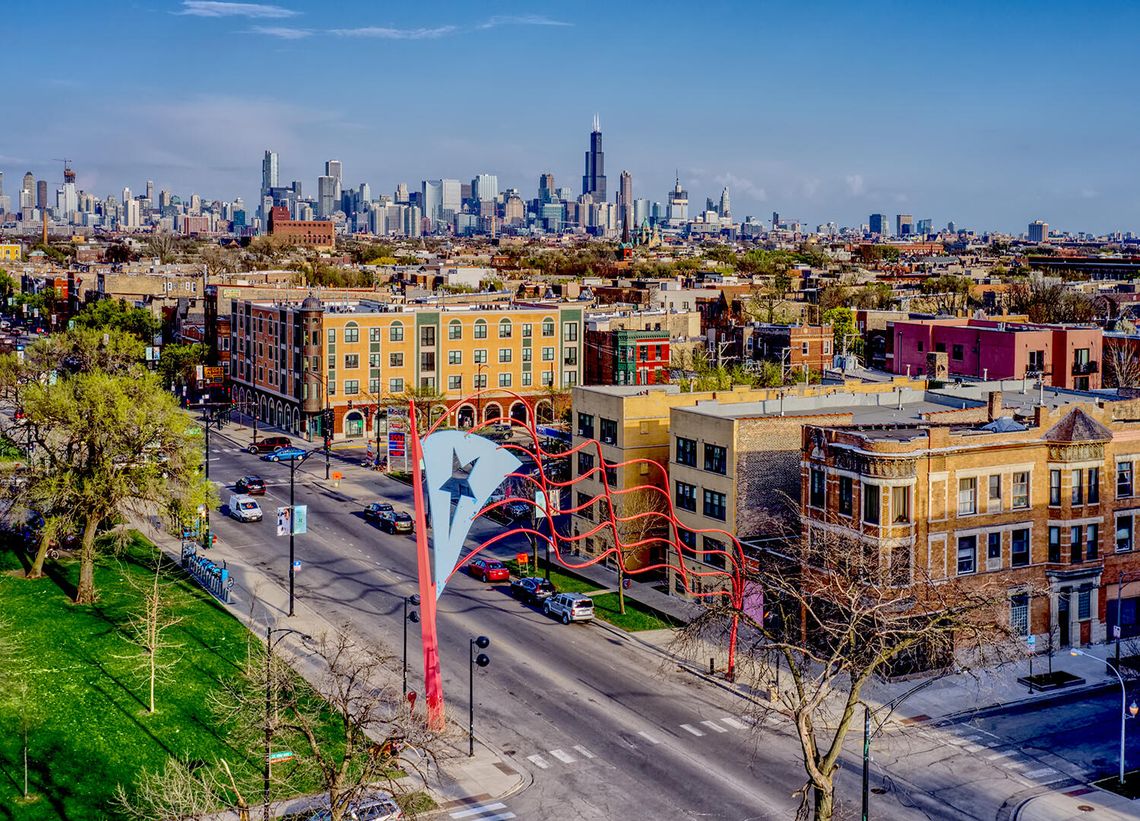
Ale najbardziej zapadł mi jednak w pamięć powrót do mojej dawnej dzielnicy na wschód od Humboldt Park. Moja rodzina mieszkała tam przez prawie 23 lata – od około 1952 do 1975 roku.
Przez większość tego czasu dzielnica była tak polska, że moi rodzice czuli się niemal tak, jakby wrócili do Polski. Nasza parafia św. Fidelisa miała pięciu księży. Wszyscy mówili po polsku. Jeden z nich, podobnie jak my, przybył do Ameryki jako osoba przesiedlona po II wojnie światowej. Ledwo mówił po angielsku. Siostry zakonne w mojej szkole były Polkami urodzonymi w Ameryce, ale mówiły doskonałą polszczyzną. Moi rodzice czuli się jak u siebie, uczestnicząc w mszach odprawianych po polsku i rozmawiając z siostrami zakonnymi po polsku o tym, jakim byłem grzecznym chłopcem.
Ale to nie było jedyne, co kochali w tej okolicy. Uwielbiali fakt, że około połowę mieszkańców naszej ulicy stanowili niedawni imigranci z Polski albo Polacy, którzy przyjechali jeszcze przed wojną. Po utracie tak wielu członków rodziny i przyjaciół podczas wojny moi rodzice cenili możliwość rozmowy po polsku z sąsiadami o świecie, który pozostawili za sobą, i o świecie, w którym przyszło im teraz żyć.
Moi rodzice uwielbiali również zakupy na Division Street. Tamtejsze sklepy mięsne, piekarnie, sklepy odzieżowe, restauracje, sklepy z narzędziami i bary były prowadzone przez Polaków lub zatrudniały pracowników mówiących doskonałą polszczyzną. Moi rodzice lubili wchodzić do miejsc, gdzie w witrynach widniały napisy: „Mówimy po Polsku”.
Ale potem wszystko to zaczęło się zmieniać, podobnie jak zmieniły się trolejbusy CTA. Do 1973 roku wszystkie 700 trolejbusów zostało wycofanych z ruchu i zastąpiono je autobusami spalinowymi. A gdy w 1975 roku wyprowadziliśmy się z tej dzielnicy, jej polskość nie zniknęła całkowicie, ale było jej coraz mniej.
Prawdopodobnie największym powodem tych zmian było wyburzenie kościoła św. Fidelisa w 1968 roku z powodu problemów konstrukcyjnych. Z czasem zamknięto również szkołę parafialną. Kolejnym czynnikiem był fakt, że wielu Polaków i Amerykanów polskiego pochodzenia zaczęło lepiej zarabiać i przeprowadziło się do lepszych dzielnic. Trzecią przyczyną był wzrost przemocy związanej z działalnością gangów latynoskich. Na naszej ulicy, Evergreen Ave., spłonęło pięć domów, w tym także nasz.
Kiedy moi rodzice ostatecznie opuścili okolice Humboldt Park w 1975 roku, miejsce to nie przypominało już Polski, z której Niemcy wyrwali ich podczas wojny. Nie przypominało też Polonii, którą odkryli po przyjeździe do Chicago w 1952 roku. Mojej matce brakowało rozmów z sąsiadkami o tym, jak wieczorne spacery po Humboldt Park przypominały jej dzieciństwo spędzone w lasach wschodniej Polski przed wojną. Mojemu ojcu brakowało siedzenia przy stoliku w barze z innymi dipisami (osobami przesiedlonymi) i wspólnego wspominania wojennych przeżyć.
Świat zmienił się dla nich, tak jak zmienił się dla innych Polaków i Amerykanów polskiego pochodzenia z naszej dzielnicy. I będzie się zmieniał nadal – dla nas wszystkich.
Nie możemy zatrzymać tej zmiany.
Jedyne, co możemy zrobić, to pamiętać
Change
I start every day the same way. After getting myself a cup of coffee, I open my iPad and check out my Facebook page. I start with my memories and then move onto notifications from my Facebook friends and then end up scrolling through the posts that Facebook thinks are right for me. If you do Facebook, you know exactly what a lot of these posts are, mainly ads for things Facebook imagines I’ll be interested in. In my case, it’s generally ads for hearing aids, cruises, or shaving kits. I tend to scroll through all of this stuff quickly to get to the posts from the pages I’m really interested in.
Today, that’s where I ran into something that stopped me. On Facebook’s “Growing Up in Chicago” page, I saw a photo of an old CTA bus with two metal trolley poles that stretched up to a pair of parallel, overhead wires. These trolley buses relied on electricity to transport people. At their peak in the late 1950s, there were about 700 of these electric-powered coaches in Chicago. That represented about one-quarter of the CTA’s transit vehicles, the others being regular motor buses and old streetcars.
Seeing that trolley bus photo started me thinking about how Chicago has changed since the 1950s when I was a kid. I haven’t been to Chicago since 2016 when I did a book tour to promote Echoes of Tattered Tongues, my book of essays and poems about my parents and their experiences in the slave labor camps in Germany and their lives in Chicago after the war. I spent a week going to bookstores all over the city and reading from my book and autographing copies. I even did some radio interviews on WBEZ and a Polish radio station.
But probably the most memorable thing that happened was returning to my old neighborhood east of Humboldt Park. My family lived in that area for almost 23 years, from about 1952 to 1975.
For most of that time, the neighborhood was so Polish that my parents felt almost like they were back in Poland. St. Fidelis, our local parish, had five priests. All of them spoke Polish. In fact, one of the priests, like us, came over as a Displaced Person after World War II. He could barely speak English. The nuns at my school were all Polish Americans who spoke perfect Polish. My parents felt right at home going to masses that were all in Polish and talking to the sisters in Polish about what a good boy I was.
But that’s not all my parents loved about the neighborhood. They loved the fact that about half the people on our block were either recent Polish immigrants or Polish immigrants from before the war. Having lost so many family members and friends because of the war, my parents loved talking in Polish to these neighbors about the world they had left behind and the world they now lived in. My parents also loved shopping on Division Street. The butcher shops, bakeries, clothing stores, restaurants, hardware stores, and taverns there were either run by Poles or had workers who spoke perfect Polish. My parents loved going into places with signs on their windows that said, “Mówimy po Polsku.”
But then all of that changed just the way the CTA trolley buses changed. By 1973 those 700 CTA trolley buses were gone, replaced by gas-powered buses. And by 1975 when we moved out of that neighborhood, its Polishness hadn’t disappeared, but there was less and less of it.
Probably the biggest cause for the change was that St. Fidelis Church was demolished in 1968 because of structural problems. The parish school eventually also closed its doors. Another factor that contributed to the decline in Polishness was the fact that many of the Poles and Polish Americans in the neighborhood were starting to make more money and were moving into better neighborhoods. A third cause was probably the increase of violence in the neighborhood stemming from Hispanic gangs. On my block of Evergreen Avenue, five houses, including our home, were burned down by the gangs.
By 1975 when my parents finally moved out of the Humboldt Park area, it didn’t feel like the Poland they had been dragged out of by the Germans during the war, and it didn’t feel like the Polonia they had discovered when they first moved to Chicago in 1952. My mother missed talking to her neighbors about how walking through Humboldt Park in the evening reminded her of what it was like growing up in a forest in eastern Poland before the war, and my father missed sitting with the other dipisi in a bar and sharing his memories of the war.
The world had changed for them, just as it had changed for the other Poles and Polish Americans in our neighborhood, and just as it will continue to change for all of us.
We can’t stop that change.
All we can hope to do is remember.
.JPG)